
Home / NewsSign Up for Premium
Ads-FREE Content



ACTIVE FORUM TOPICS
- New Year’s Traditions
- What’s your favourite Fairy Tales (and their possible origins)
- Dinner Invitations for Famous People from the Past
- Natural rock formations or man made?
- Cubit Numerology
- Thoth’s Storm
SUGGESTED BOOKS




PARTNERS




UPDATED 6 JANUARY, 2021 – 22:04 NATHAN FALDE
Long-Lost Runestone From Viking Monument Recovered In Sweden
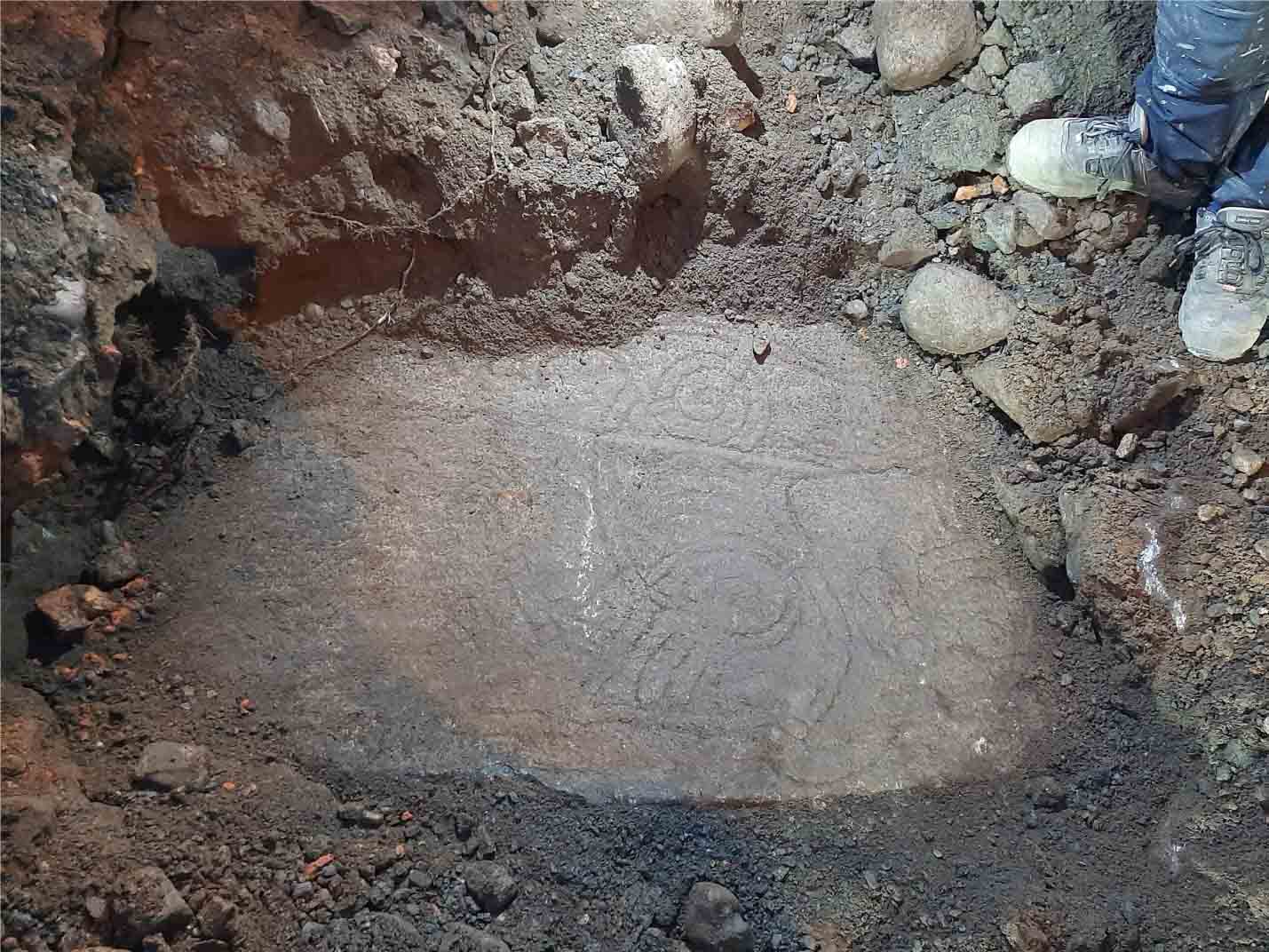
Performing excavations in an area where new sewer lines are currently being installed, Swedish archaeologists have announced a remarkable and borderline miraculous find. While digging in half-frozen soil near the city of Ystad in December 2020 AD, they unearthed a large oblong-shaped runestone that featured an intricate carving of a powerful, ferocious wolf, which is known as Fenris (or Fenrir) in Norse mythology.
The discovery was shocking, in part because it was unexpected and in part because of what it represented. The rocky relic was quickly identified as one of the stones used to construct the Hunnestad Monument, a famous vertical and horizontal assemblage of image-bearing and inscribed runestones that had once stood just a few miles away, northwest of Ystad. The runestone had not been seen by anyone since the 18 th century AD, when the once magnificent Hunnestad Monument was destroyed by an unappreciative and uncomprehending landowner.
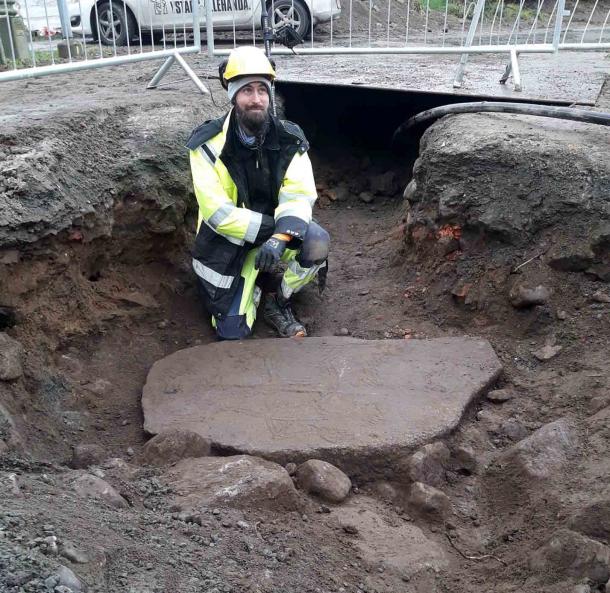
Archaeologist Axel Krogh Hansen at the statue that was found during the excavation in front of a sewer line. (Image: Annika Knarrstreöm / Arkeologerna)
How A Super Famous Runestone Became Part Of A Bridge
“It feels unbelievable, because it was a completely normal excavation monitoring,” exclaimed Axel Krogh Hansen , an archaeologist from Sweden’s National Historical Museums. “We found some porcelain fragments and bricks in the lower layers from the 18 th century, and I joked a bit with the others that ‘now we have to be a little careful so we do not get rune or image stone,’ and then suddenly we have a carved stone right in front of us.”
Read more:
 Hutts Ultra Blogging World